
On 9 July 1955, Bertrand Russell and Albert Einstein launched the Russell-Einstein Manifesto. Signatories included the great scientific minds of the period and the manifesto was a plea to abandon nuclear weapons but in the only context possible: that of the abolition of war.
There lies before us, if we choose, continual progress in happiness, knowledge, and wisdom. Shall we, instead, choose death, because we cannot forget our quarrels? We appeal, as human beings, to human beings: Remember your humanity, and forget the rest. If you can do so, the way lies open to a new Paradise; if you cannot, there lies before you the risk of universal death….
This plea came a decade on from the nuclear weapons nightmare that was made reality in the unleashing of US atomic bombs on Hiroshima and Nagasaki in 1945.
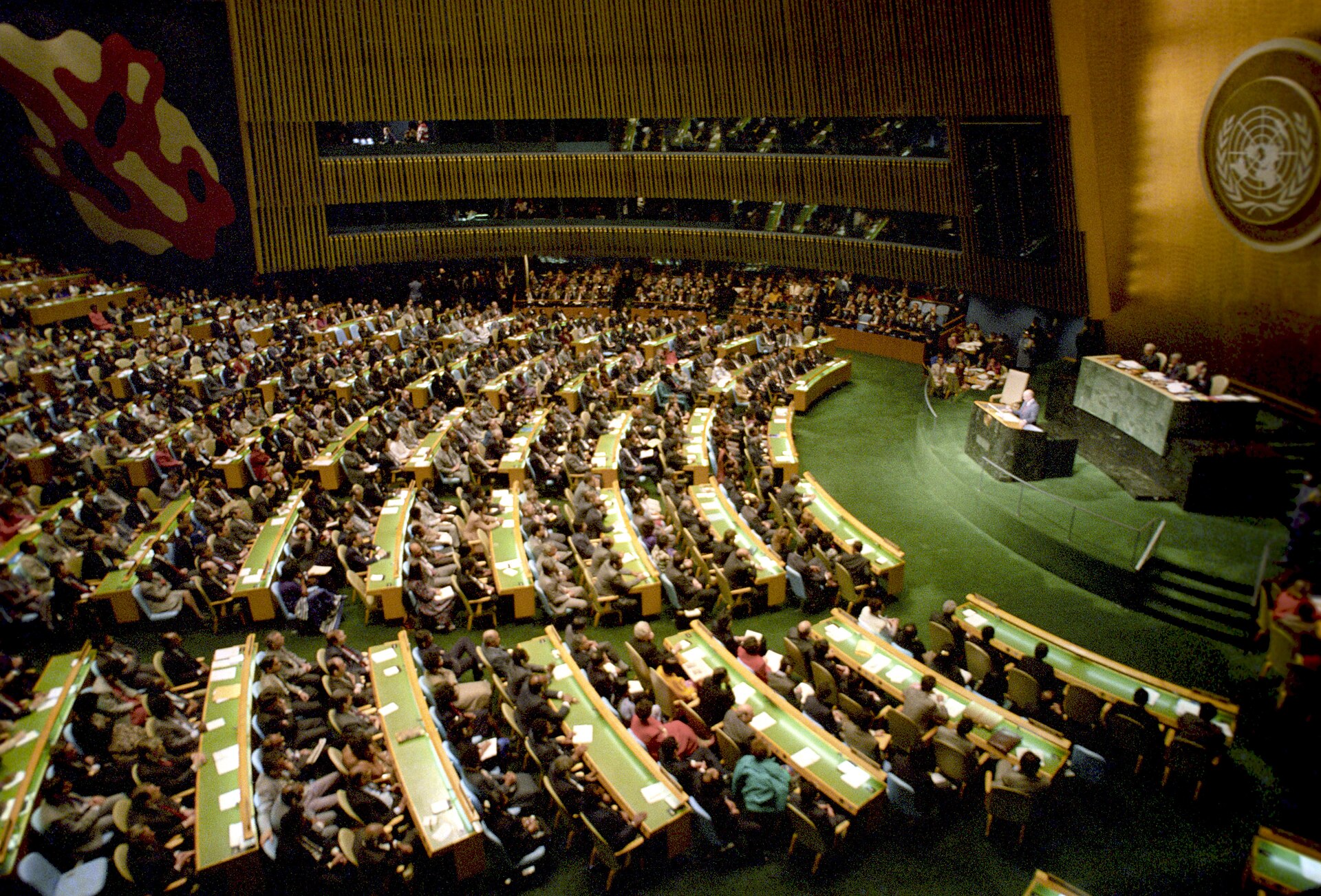
In 1959 the UN General Assembly adopted unanimously Resolution 1378 (XIV), the first ever to be co-sponsored and supported by all UN member states. This resolution put “general and complete disarmament (GCD)” on the General Assembly’s agenda, where it has been ever since. Its preamble stated that “the question of general and complete disarmament is the most important one facing the world today.”
In 1961, the U.S. and Soviet Union jointly sent the President of the General Assembly the “Joint statement of agreed principles for disarmament negotiations” (now known as the McCloy-Zorin statement) carrying eight principles for disarmament negotiations. That same year John Kennedy’s address to the United Nations affirmed that both the United States and Soviet Union “now accept” GCD as a goal. The term “must no longer be a slogan,” he said, “it is now a realistic plan”. “To destroy arms, however, is not enough. We must create even as we destroy ― creating worldwide law and law enforcement as we outlaw worldwide war and weapons.”
Sixty five years later, we face the existential threat of not just nuclear war but climate breakdown in this sixth mass extinction era. We are in a far more precarious place than we were at the height of the Cold War and the Russell-Einstein Manifesto.
ON THE HIGHWAY AND SPEEDING TOWARDS A 3 DEGREE HOTTER WORLD
The world is currently around 1.4°C warmer than pre-industrial levels and it is almost a certainty that this year (2026) will be the coolest year of the rest of our lives. With current national climate plans and policies, we are on course to a 3°C hotter world by 2100. Not 1.5°C or 2°C but 3°C. The tiny 1°C difference in average temperature will translate into real-world impacts of biblical proportions. After all, the average global temperature of the ice age was only 6°C cooler than today.
The climate emergency has made this year, 2026, witness to horror upon horror: extreme heat, forests burning, farmland arid, deadly floods, oceans boiling, 7000 souls swept away in the catastrophic landslide cause by a glacial collapse in Nepal and China.
In truth, this is a World War and one that we have been incrementally led into thanks to the global fossil fuel industry with their climate change ‘defence, denial and disinformation’ strategy ongoing since the 1950s.
A decades long literal slow-burn world-wide war on our home planet, escalating to events of 2026, where it is clear: the vast majority of humanity is nothing more than “human sacrifice” on the altar of “blood oil profit”. Add into this climate inferno the trillions of life-forms that are also on the sacrificial table ― farm animals, forest animals, sea animals, birds, and insects among others. We are heading for 3 degrees or more of heating with current climate plans and policies and leaders are ‘fiddling while Rome burns.’
Incomprehensibly, this world-wide war on our home planet is, right now, being shunted into second place on the international agenda. It has been superseded by a renewed appetite for more-of-the-same wars of aggression that humanity has suffered over centuries. Russia’s invasion of Ukraine, Israel’s genocide and ecocide of Palestinian people and their land, war on Iran by USA and Israel, and other media sanctioned ‘lower-profile’ but no less-damaging conflicts in countries such as Sudan and Congo, are all happening concurrently.
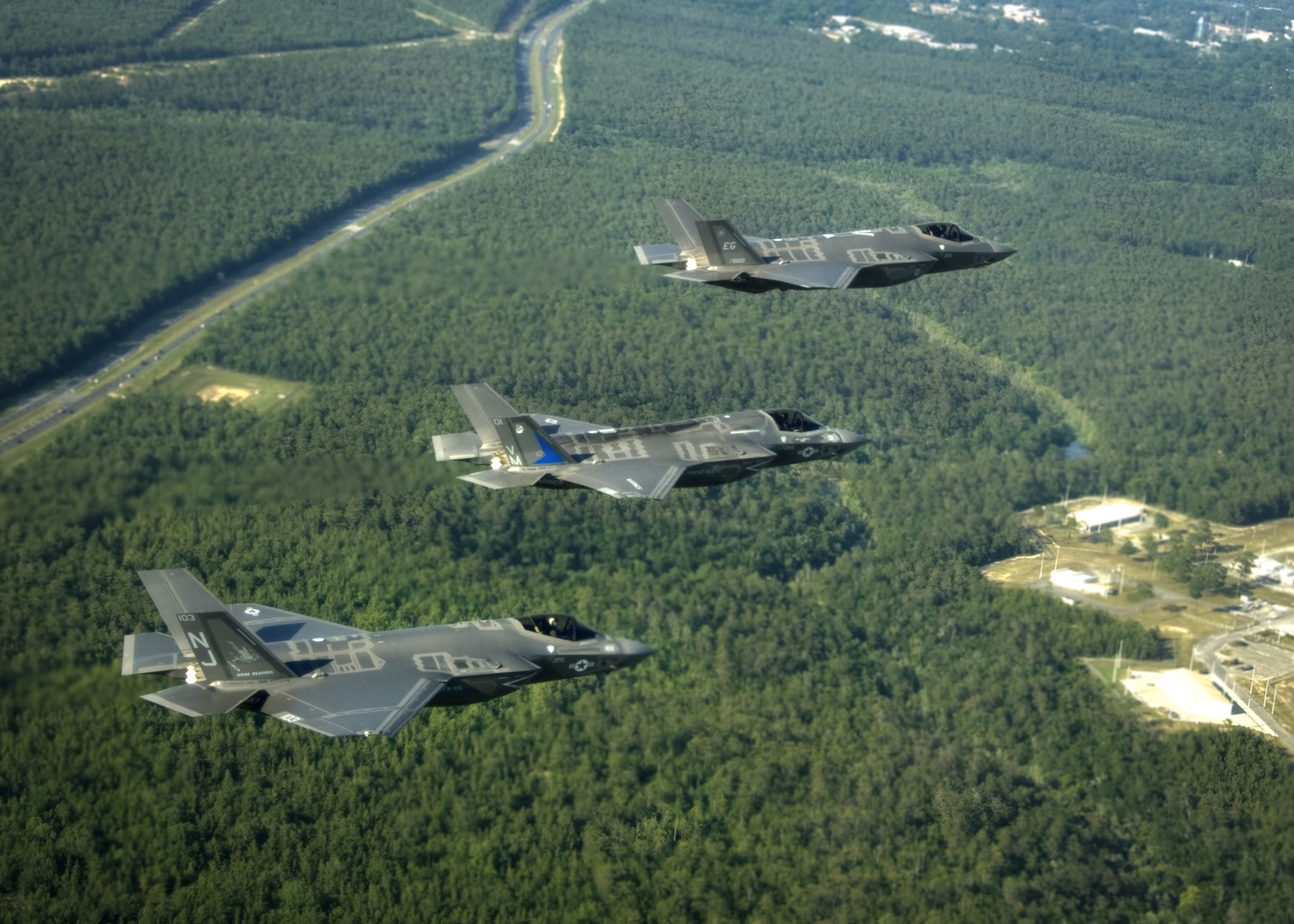
Ever rising military spending is the enabler of this ― $3trillion p/a and rising. Public expenditure which could otherwise be applied to climate finance for urgent and severely under-funded mitigation and adaptation are handed over to the arms industry. And the more nations spend on their military hardware ― jets, warships, tanks, missiles ― the greater the military GHG burden. A burden which is exempt from compulsory reporting to the IPCC/UNFCCC.
Since 2001 the global top 20 military spenders alone are estimated to be responsible for at least 10 billion metric tonnes of CO2 equivalent (tCO2e) of military-related emissions during the first quarter of the 21th century. This is the result of US$40 trillion spent on their militaries since 2001.
Meanwhile, the richest countries spend 30 times as much on their armed forces as they spend on providing climate finance for the world’s most vulnerable countries. With more conflicts leading inevitably to higher military spending ― and GHG emissions ― so we get further and further away from our ability to address ― and fund ― the over-arching immediate threat to our collective safety: climate breakdown.
If we cannot learn to co-operate, we have no hope of resolving the climate emergency.
MILITARY SPENDING IS THE ENTRY POINT TO THE BIGGER PICTURE
“Our scientific power has outrun our spiritual power. We have guided missiles and misguided men.”
Martin Luther King
The war machines and lucrative arms industries are at the heart of our climate crisis. They are rooted largely in the big economies and are the manifestation of decade upon decade of colonial, neo-colonial, imperialist policy-making largely implemented in defence of economic interests. It has resulted in a century and more of perpetual war waged on innocent civilians and our home planet.
No surprise then that military budgets are considered sacrosanct by states and mainstream media alike. To be questioning scale or efficacy is all too often considered at best naïve or at worst ‘unpatriotic’. But ever rising military budgets are not the only game in town when considering how best to ‘protect’.
Just when we need it the most, the erosion of the many tools essential to conflict prevention, not least meaningful diplomacy along with confidence building measures, is clear for all to see. Studies show the more you invest in these measures, including peacekeeping, the greater the impact. For example, in a 2018 study, it is estimated that if the UN had invested $200 billion in peacekeeping operations with strong mandates during the period 2001-2013, major armed conflict would have been reduced by up to two-thirds (relative to a scenario with no peacekeeping operation) and 150,000 lives would have been saved. The actual budget over these 13 years was $59 billion. Conversely, the more you spend on weaponry, the more likely states are to put those weapons to use. Global military spending has been increasing year-on-year for 11 consecutive years, rising by 41% over the past decade (2016-25), and in 2025 we saw the highest number of state-based conflict since WWII.
We must elevate the need for frameworks within which discussion can take place about how universal, equitable and ambitious cuts to military spending can be advanced. Ideas such as the Global Peace Dividend Initiative led by physicist Carlo Rovelli and supported by over 50 Nobel Prize Laureates ― an international agreement to jointly reduce military spending and redirect the huge savings to a global fund to fight planetary emergencies. It proposes to reduce military spending by 2 per cent per year, in all countries. Our own TPNS proposal is the ‘Five Percent Formula’ ― a two-part route to universally and equitably cut annual military expenditures to a level proportionate to the need that would almost halve global military spending via absolute annual cuts of 5% over 10 years and thereafter implements a 5 percent threshold formula, designed to rein back annual military spending increases.
A reduction in military expenditure is just the beginning. The underlying and outdated 19th and 20th century thinking on foreign and defence policy and military economy needs replacing with ideas fit for this climate emergency.
THE BIGGER PICTURE
Reducing annual military spending means we must think harder and more imaginatively about how we can ‘transform defence’ to emphasise ‘sustainable human safety’. It means to prioritise quality (sustainable human safety) over quantity (spending). This holistic approach is not reflected in national defence budget-setting but it is the current national security framework that focuses on “quantity” that gets us the ever-increasing military expenditure without making us safer or slowing down climate change.
Instead of blank cheques to the military vested interests, we should reconsider our “defence” priority: what needs to be increased to meet the interests of sustainable human safety in the climate changed world? Surely climate breakdown, pandemic and inequality are more than equal in scale to the threats to human security from conventional ‘adversaries’ in other countries?

The concerns that need prioritising and therefore significantly increased funding would include climate mitigation and adaptation and biosecurity against pandemic. How about investing in “non-offensive defence” capability and cost-effective defensive-only armoury? From there we could ask what items are the least necessary to meet our needs? Or ones that need to be radically reduced? How about fossil-fuelled big ticket military weaponry and equipment for power projection, or the privatisation and outsourcing of national security?
Is the climate emergency now driving civil society and progressive decision-makers alike to an inevitable conclusion: that to reassess current ‘defence’ policy-making and thus conventional annual military expenditures is to enable full and proportionate funding to meet all human safety needs?
This may be the only way to survive.
GOING ALL IN- ABOLISH WAR
As Martin Luther King said “the arc of history is long but it bends towards justice”. It does and it will ― but it is a race against the clock that we must win. We don’t want a world war triggered with Russia, China or any other nation on earth. We want to stop the 6th mass extinction; the permafrost from melting; the coral reefs from disappearing; the ocean from boiling. We want Earth ― our precious and only home ― to flourish. We want to stay within 2C limit (or if still possible 1.5C) ― we don’t want a terrifying 3 degrees of warming or more.
Ordinary people all over the world are in the fight of their lives to save their livelihoods and home planet. We need a transformational shift in foreign policy and international relations because climate change does not recognise borders. We need to relearn co-operation if humanity wants to have any hope of resolving the climate emergency.
But though we cannot redirect military spending nor decarbonise the military armoury overnight we can ― paradoxically enough ― prevent and halt all wars at anytime with enough political will. The absence of war means a massive reduction gas-guzzling military equipment. Without the need for fossil-fuelled military, the carbon-intensive (and hardest to decarbonise) arms industry is redundant.
To abolish war is to eliminate a major contributor to death, environmental destruction ― and climate chaos. To abolish war is to begin to see the end of the military-fossil fuel relationship. To abolish war is one necessary step in pursuit of the end of fossil fuels and the zero carbon world we must achieve.
The Global and Comprehensive Disarmament agreement of 1961 remains the ultimate goal of the combined activities in the UN disarmament machinery. In the UN 2007 annual report, Ban Ki-moon stated that “the ultimate strategic goal of the United Nations is ‘general and complete disarmament under effective international control’”.
At this precarious moment in human history, the time has come to pick up that baton and finally advance the case to abolish all wars on Earth
“Humankind is at a crossroad. The risk of sleepwalking into a self-destructive catastrophe ― as we have done many times in the past ― is very high. But this time, in addition, we face a major ecological disaster and nuclear holocaust. We need publications like this latest one from Tipping Point North South that do not hide the head under the sand, as the politicians we have elected are currently doing, but instead addresses the problem and discusses solutions.”
Carlo Rovelli is a theoretical physicist who has made significant contributions to the physics of space and time and is currently directing the quantum gravity research group of the Centre de physique théorique in Marseille, France. He is the founder of the Global Peace Dividend proposal.
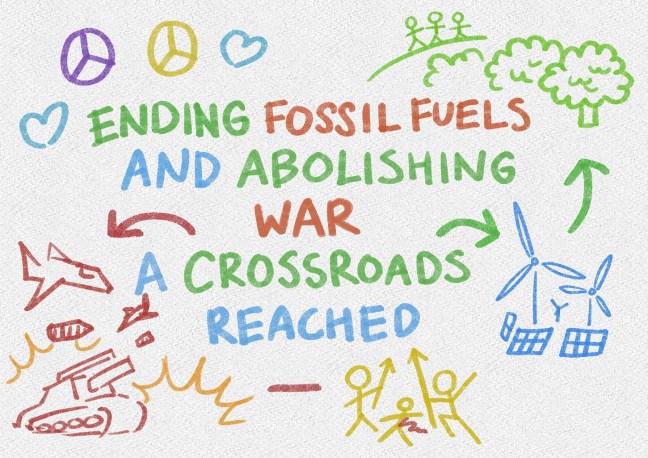
ENDING FOSSIL FUELS AND ABOLISHING WAR: A CROSSROADS REACHED
Download and read this publication here.
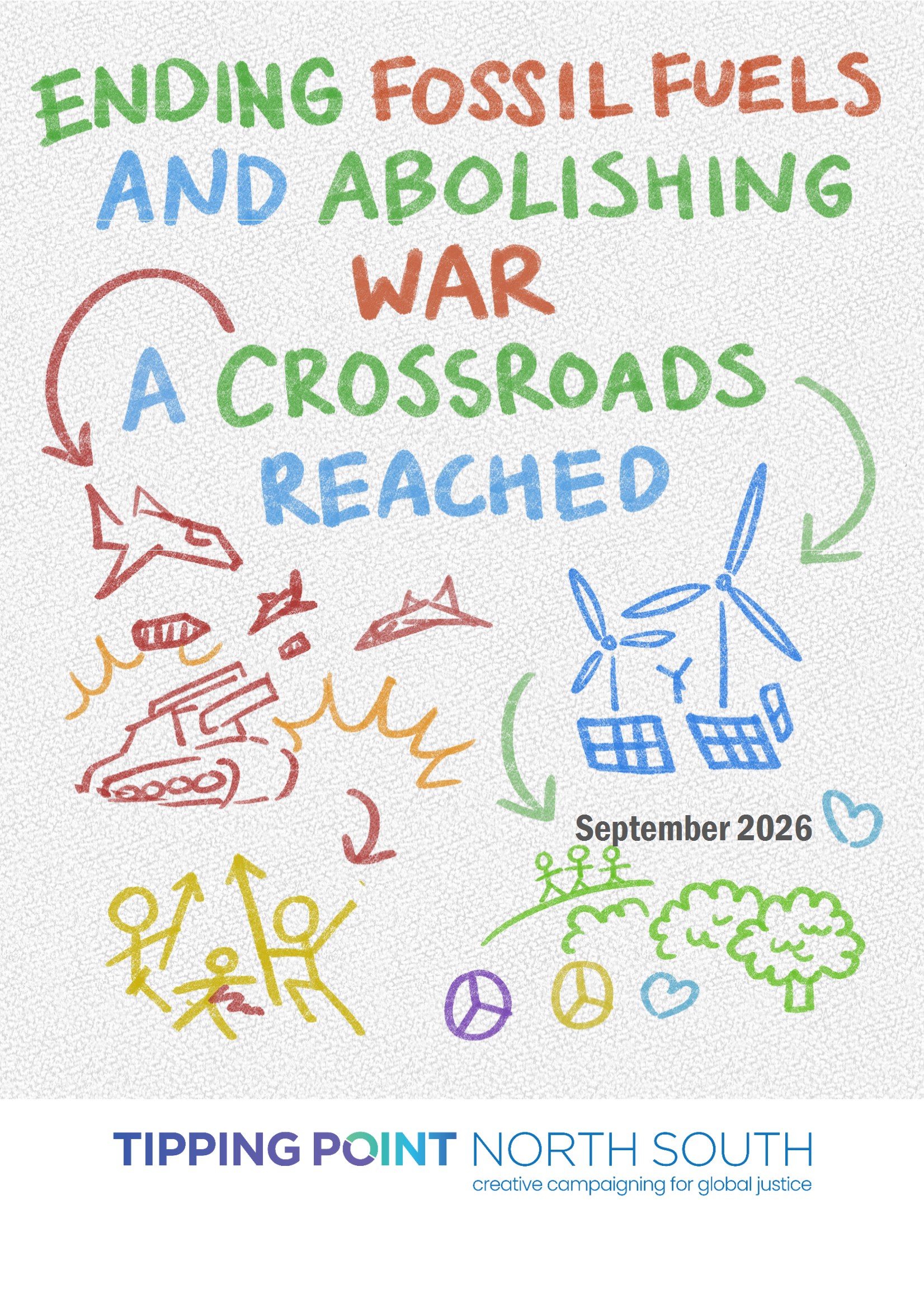
The publication calls include:
- Military decarbonisation & UNFCCC/IPCC reporting: All nations to include their militaries and the associated supply chains (eg the military technology industry) in their GHG emission reduction plans and targets in NDCs and NAPS.
- Implementation of Article 2.1.(c) of the Paris Agreement which obliges states to “making finance flows consistent with a pathway towards low greenhouse gas emissions and climate-resilient development”. Increasing and high military spending undermines the mandate of Article 2.1.(c) and should therefore be progressively reduced to bare minimum.
- Proposal for demilitarisation: since military spending accelerates the climate emergency, a Working Group should be formed led by progressive nations that wish to support research, advancement and implementation of route(s) by which nations can agree on the universal and equitable redirection of wasted military spending to climate finance and just transition.
- Restart UN general and complete disarmament (GCD) goal: Restart UN’s longstanding GCD process, and this time not just in words but in practical and tangible actions. Let’s help the United Nation make war ‘history’.


4 thoughts on “The abolition of war – a nail in the coffin of fossil fuels”
Comments are closed.