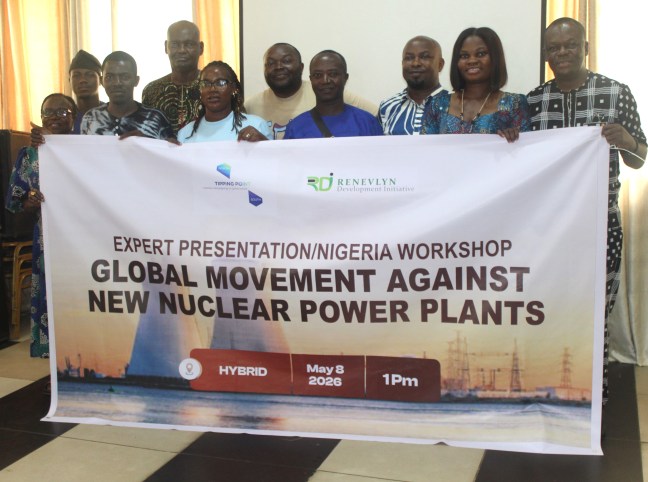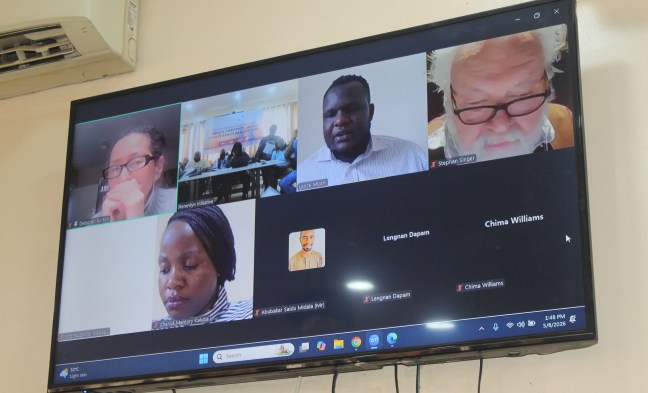
May 8, 2026

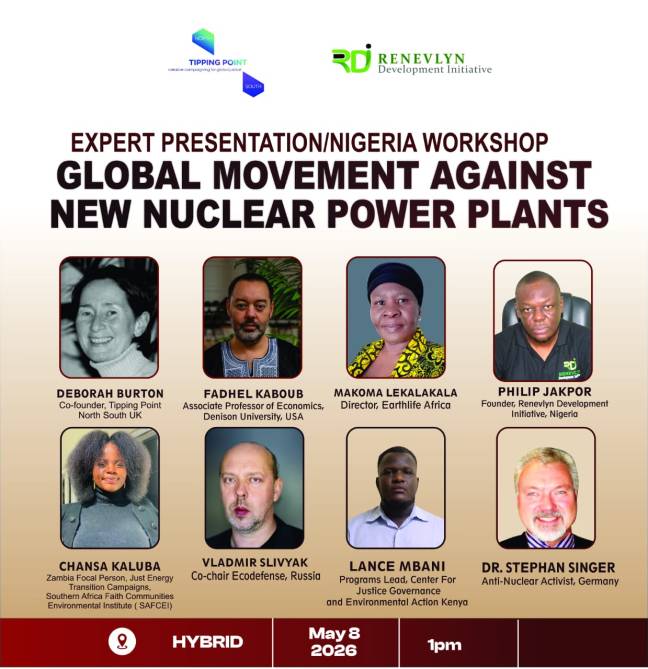
DEBORAH BURTON’s Contribution for Expert Workshop “Africa’s Nuclear Misadventure”: 

Transcript

Greetings and welcome everyone,

This topic – Nuclear Energy – has been a long -time controversial issue in many global north countries.  Now it is making its presence felt across the African continent.

It’s a complete distraction. It is a false solution.

Africa is home to 60% of the best solar resources globally. According to the International Renewable Energy Agency, Africa’s potential to generate renewable energy from existing technologies is 1,000 times greater than the projected demand for electricity in 2040.

It was to delve deeper into this nuclear vs 100% clean green energy  that 12 organisations from across the African continent, Europe and Russia came together to launch our report last year:

The Alarming Rise of False Climate Solutions in Africa: The Nuclear Energy Misadventure

We are so happy that a number of our co-authors are joining us today in the presentations

And so to offer some broader background to the issue – as we start this afternoon off – I’m going to talk a little bit about the content of the report, written in the context the seemingly never-ending announcements to roll out nuclear power plants across the African continent.

Angola, Burkina Faso, Egypt, Ethiopia, Ghana, Kenya, Morocco, Namibia, Nigeria, Rwanda, Senegal, Tanzania and Uganda have all made announcements concerning new nuclear power plants. South Africa has the continent’s only operating nuclear power plant, commissioned in 1984 under the apartheid government .

We are honoured to have Makoma Lekalakala speaking later – Makoma was and remains at the forefront of a highly effective anti nuclear power campaign in South Africa.

What we collectively document in the report are the numerous reasons why nuclear energy is not the answer to the continent’s effort to reduce emissions:

  1. Urgency. The urgency of the climate crisis means nuclear energy is too slow to deliver. We don’t have time
  2. Nuclear energy is toxic. Harmful to human health and the environment AND Long-term storage of radioactive waste remains unresolved in all cases around the globe
  3. It is a waste of money. Nuclear plants are extremely capital-intensive.
  4. Three quarters of Africa’s climate finance needs are not met and more than half of existing climate finance is in debt instruments. The focus on nuclear energy will severely crowd out already precious and inadequate climate finance for mitigation, adaptation and renewable energy generation projects.
  5. It is a route by which corruption can flourish. The only ones to benefit are foreign banks and companies
  6. Land displacement. This is inevitable and opaque processes mean communities are not aware of decisions being made. We will hear about this in detail from colleagues later.
  7. The continent is becoming both a potential testing ground and, in particular, a battleground for conflicting geopolitical influences that are playing out in the field of nuclear technology exports, or rather the prospect of such exports.
  8. And to NUCLEAR WEAPONS issue. -Globally, the main drivers of nuclear energy are and will remain the nuclear weapon states. Without the civil use of nuclear energy, nuclear weapons programmes would be extremely difficult to finance and implement.

*******

The pro-nuclear energy lobby has money to throw at the global PR effort. This now extends to include countries in Africa where they promote their highly polished version of why nuclear energy is the answer to keeping the lights on.  The lobby also has a particularly strong presence at all major climate meetings.  Again we will hear more about this later.

So why this unwelcome nuclear power resurgence?

Because the climate emergency has thrown a lifeline to the nuclear power industry which has now managed to insert itself into the energy solutions pathway.

But civil society is not taking it lying down.  Indeed, some countries have fully turned their back on nuclear – later on we will hear the inspiring story of anti-nuclear campaigning Germany.

But I want to take a moment to talk about Ghana.

In 2024 Ghana signed an agreement with U.S.-based NuScale Power to deploy a small modular reactor (SMR), marking the nation’s first foray into nuclear energy. This initiative is said to diversify Ghana’s energy mix and is part of a broader strategy to integrate advanced nuclear technologies. Ghana’s formal decision to include nuclear power in the national electricity mix was announced in August 2022. Also in 2022, the United States announced a grant of $1.75 million to support nuclear energy training in the form of nuclear development -in what the US views as a key ally – Ghana.  This was done to presumably counter Russian influence in the West Africa region.

We will hear more from Vladimir later on this topic.

One of our report co-authors is the Ghana based NGO Human Rights 360.  As part of its advocacy against ongoing negotiations and implementation of the various phases of the agreement, it has called on Ghanaians to put pressure on the government to abandon the idea and has taken its campaign to the communities that will be directly affected by the proposed nuclear plant site.

Executive Director of Three-Sixty Human Rights, Alberta Kpeleku, has said:

 “We are here to shed light on the often-overlooked consequences of nuclear energy, especially with reference to nuclear waste. From environmental disasters to health risks and economic concerns, it’s time to re-evaluate nuclear power. The impacts on the environment include nuclear accidents, radioactive waste, and contamination. Health risks include cancer, genetic damage, kidney disease, and other related conditions caused by radiation exposure.
Additionally, there are security threats, such as nuclear proliferation, terrorism, and cybersecurity risks.
Alternatives and solutions for nuclear energy include renewable energy sources—solar, wind, hydro, and geothermal—which should be prioritised.
There should be a call to action involving demands for policy changes, support for renewable energy investment and research, and finally, the intensification of public awareness and education campaigns.”

*************

To end

Nuclear power is wrongly being sold to the citizens of the continent as a cornerstone of Africa’s clean energy future. It is increasingly marketed and positioned as Africa’s solution for clean energy and climate mitigation.

But nuclear energy belongs to the past.

Renewables are the future – and our guest speaker Fadhel Kaboub will speak more to this later-

Because they are the only truly clean, safe and sustainable option on the table in this climate emergency.

Nowhere is that a more appropriate course of action to take than across the African continent.